
What’s Next for Fitness? 9 Fitness Trends of 2026
The fitness industry never stops evolving. Leg press machines, Smith machines and power racks that filled gyms three years ago now feel dated. Members notice that before spreadsheets do. Facilities with outdated layouts lose retention rapidly.
Power racks and leg press machines define modern strength zone layouts. Gym survival demands layouts matching how members actually train and recover in 2026
AI mirrors impress in presentations, but meaningful transformation happens in hip thrust machines, dip machines and dedicated recovery zones. Members demand joint-safe exercises integrated into sessions. Facilities need flowing strength layouts, not cable congestion blocking leg press machines and Smith machines.
TIFC identifies proven 2026 fitness trends delivering measurable facility performance and retention. As gym floors evolve, operators who align early with these changes gain a clear competitive advantage.
1. The Biomechanics Boom: Precision Over Heavy Lifting
Modern trainees prioritise joint-safe training over ego-driven lifting. Equipment such as leg press machines enables controlled, heavy loading without unnecessary lower back strain or form breakdown. Facilities replacing chaotic free-weight zones with guided strength equipment protect member retention and reduce injury claims.
Leg press machines have become essential gym anchors, enabling heavy loading without placing undue strain on the lower back. Plate-loaded leg press models support high-volume leg training with greater stability and safety compared to risky, poorly executed free squats. Facilities that prioritise guided strength equipment protect member retention.
2. The Glute Training “Gold Rush”
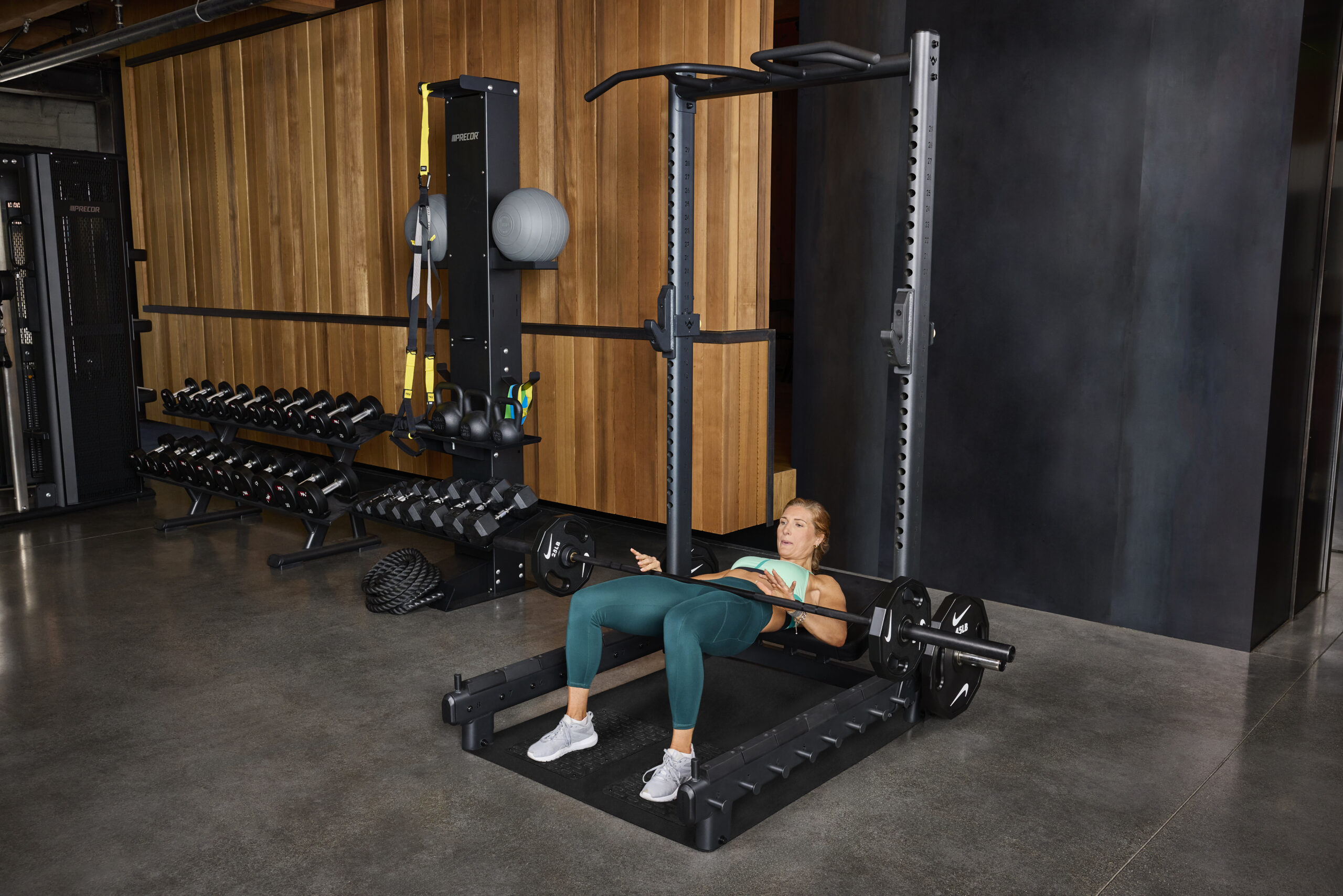
Glute zones are now essential gym infrastructure. Barbell hip thrusts on flat benches create instability and member frustration. Purpose-built hip thrust machines deliver proper alignment, maximising glute activation for physique-focused training.
Hip thrust machines provide biomechanically correct alignment vs. barbell instability. Facilities equipped with dedicated glute equipment attract physique-focused members seeking maximum muscle activation and training efficiency.
3. The Solo-Lifter and Safety Protocols
Solo training Solo training has seen a significant increase during off-peak hours, requiring built-in safety for heavy lifts. Smith machines and power racks with spotter arms play a vital role protecting members training alone, maintaining confidence without spotters.
Smith machines enable solo bench press and squats with built-in safeties preventing pin risks. Members train confidently knowing failed reps land securely. Facilities gain retention through equipment that supports 24/7 safe training.
Power racks with spotter arms have become essential safety infrastructure. Modern designs protect solo heavy training during off-peak hours. Facilities equipping proper rack safeties ensure member confidence and 24/7 operational reliability.
Partner with suppliers who evolve with your success.
4. Upper Body Functional Integration
Dip machines transform bodyweight training from niche challenge to mainstream floor essential. Members struggling with dips and pull-ups gain selectorized progression from assisted triceps/chest work to full bodyweight mastery. Single footprint equipment optimizes upper body zone density serving entire strength spectrum while maintaining authentic movement across beginner to advanced lifters.
5. Hybrid Floor Plans: Optimising for Density
Space is getting expensive. Painfully so. And a gym floor that wastes square footage is basically burning money in slow motion. Every metre has to earn its place now.
That’s why single-purpose islands are slowly disappearing. In their place, you see tighter zones that can handle multiple movements, multiple users.
The goal isn’t to cram people in. Rather, it’s to let more people train at once. And when the layout is right, the room breathes, even when it’s full. That’s what a modern floor has to do.
6. The 2026 Commercial Gym Checklist
By this year, a gym has to be “intentionally equipped”. The mix on your floor has to reflect how people train nowadays, not just what posters said they trained ten years ago.
- Leg Development
Leg press machines and hack squat machines anchor commercial leg development zones. Heavy-duty leg press machines handle serious loading without spinal risk as table stakes equipment. Plate-loaded hack squat machines deliver solid unracking stability lifters trust on back-off days.
- Glute Specifics
For glutes, there’s no getting around it anymore. At least one proper hip thrust machine needs to live on the floor. Not a workaround. Not a barbell hack. The real thing.
- Safety Zones
Free-weight areas require anchor equipment engineered for commercial durability while protecting solo lifters during off-peak revenue hours. Properly designed power backs withstand constant use while delivering the safety infrastructure needed for independent heavy training.
- Assisted Motion
Smith machines and dip machines create versatile upper-body zones optimised for solo training. Single-footprint pairing serves ambitious beginners through to advanced lifters seeking consistent, repeatable reps across all strength levels.
- Squat Variations
And yes, the hack squat machine shows up again. Because on days when knees are fine but backs are tired. It’s the machine people line up for. Some pieces earn their space twice!
7. Data-Driven Training Integration
Wearables drive modern gym expectations. People arrive at the gym with recovery data demanding consoles that integrate real-time rep feedback. Facilities without data-connected equipment lose competitive edge as training becomes measurable, not guesswork.
Integrated consoles must deliver this wearable integration through real-time rep feedback and recovery validation. Data-connected screens create measurable training outcomes driving adherence. Facilities gain retention edge positioning as tech-forward training environments.
8. The Rise of the Rough & the Rugged
Not every gym wants to look like a spa anymore. There’s a growing pull toward spaces that feel industrial, almost unapologetically tough: with exposed steel, thick frames, and equipment that looks like it’s been built to survive bad decisions and still ask for more.
This is where brands like CRUX fit in. No frills, no fragile parts. Just machines that can take constant punishment without flinching. High-torque motors. Frames that don’t wobble, ever. The whole space appears as a serious training room, and for lifters who care more about plates than playlists, that rough, garage-gym energy feels exactly right.
9. “Green” Fitness
Sustainability has moved out of the brochure and into buying decisions. Gym owners are starting to think about power draw and part replacements, not to mention how often a machine ends up in a scrap yard. Equipment that lasts longer and doesn’t need constant fixing makes more sense on every level, be it less downtime or less waste. Choosing durable, energy-smart machines will pay back over time.
Bottom Line
Winning gyms balance tech-enabled safety with serious strength equipment. Reliable racks and machines deliver measurable progress, driving member retention and long-term ROI rather than short-term footfall alone.
Falling behind is easy in this industry. TIFC exists to make sure it doesn’t happen at all. With the right global equipment and a clear read on where training is headed, we help you build a gym that’s ready for what’s coming, and one your members won’t outgrow anytime soon.
Partner with suppliers who evolve with your success.