Hip Abduction Machine for Controlled Lower-Body Power
The glutes often receive the most attention in lower-body training, but the muscles around the outer hips deserve equal focus. A hip abduction machine provides a simple way to train these muscles through controlled outward movement.
From supporting pelvic stability to enabling efficient side-to-side movement, the hip abductors play an important role in everyday activity and exercise. With proper setup, controlled resistance and sound technique, this machine can become a valuable addition to strength training routines.
What Is a Hip Abduction Machine?
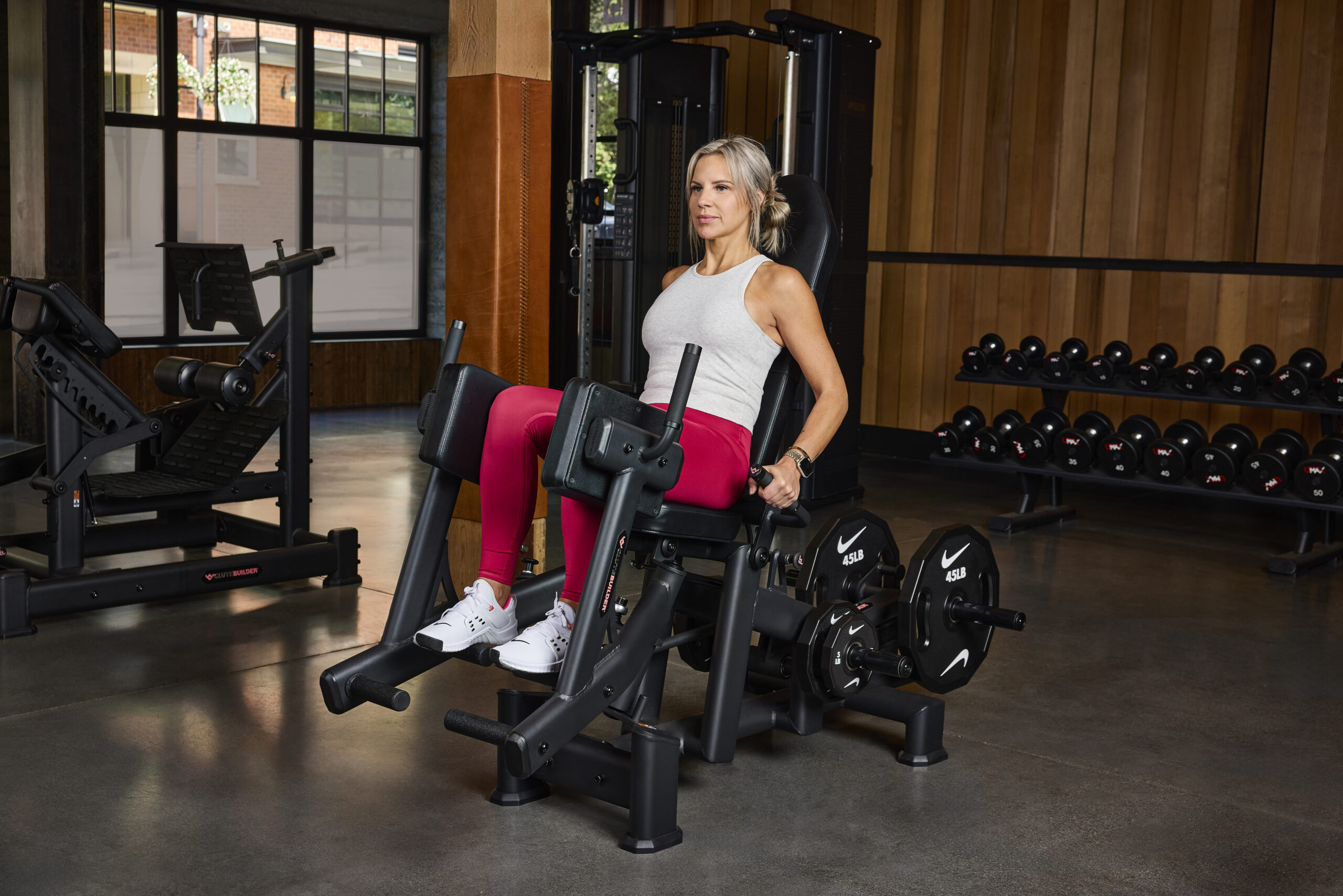
A hip abduction machine is a strength training station designed to work the muscles that move the legs outward, away from the body’s midline. Most models feature a padded seat, back support and thigh pads positioned against the outer legs. The movement is performed by pressing the thighs outward against resistance, then returning them to the starting position under control.
Also called a leg abduction machine or an abductor machine for glutes, this equipment provides a fixed movement pattern that makes it easier to isolate the hip abductors. Resistance may come from a weight stack or loaded plates, depending on the machine design.
Hip abduction should not be confused with hip adduction. Abduction moves the legs outward, while adduction brings them inward. Some commercial machines combine both movements, making them a more versatile hip exercise machine.
What Muscles Does the Hip Abduction Machine Work?
The hip abduction machine primarily targets the muscles on the outer side of the hip. These muscles move the thigh away from the body’s midline and help stabilise the pelvis during daily movement.
- Gluteus Medius
The gluteus medius is one of the main hip abductors. Located on the outer surface of the pelvis, it moves the thigh outward and helps keep the pelvis level during activities such as walking and single-leg standing.
- Gluteus Minimus
Positioned beneath the gluteus medius, the gluteus minimus also contributes to hip abduction. It works alongside the other hip abductors to support movement and stability around the hip joint.
- Tensor Fasciae Latae
The tensor fasciae latae, or TFL, sits toward the front and outer side of the hip. It assists with hip abduction and contributes to stabilising the hip and pelvis. Research examining the abductor muscle group shows that the TFL and gluteus medius activation can vary with exercise selection.
- Gluteus Maximus
Although better known for hip extension, parts of the gluteus maximus can also contribute to hip abduction. This means an abductor machine for glutes can complement exercises such as squats, lunges and hip thrusts, while placing greater emphasis on the lateral hip muscles.
One controlled laboratory study found that the hip abduction machine produced a favourable gluteus medius-to-TFL activation ratio compared with the other exercises tested, although the study involved only a small group of participants.
5 Key Hip Abductor Machine Benefits
A hip abduction machine offers a straightforward way to strengthen the muscles around the outer hip. Beyond targeted muscle training, regular hip abduction work can support several aspects of lower-body function.
- Builds Hip Abductor Strength
The main abductor muscle group helps move the thighs outward and contributes to pelvic control. Training these muscles against resistance can improve strength over time, especially when the load is increased gradually.
- Supports Hip and Pelvic Stability
The hip abductors play a vital role in keeping the pelvis stable during activities such as walking, running and single-leg standing. Better strength in this area can support controlled movement during everyday activities and exercise.
Research has also found an association between greater hip abductor strength and better balance and mobility across different adult populations, although this does not prove that stronger abductors alone cause better functional outcomes.
- Helps Train the Lateral Glutes
An abductor machine for glutes places particular emphasis on the gluteus medius and gluteus minimus. These muscles are often less directly targeted during traditional lower-body exercises, making the movement a useful complement to squats, lunges and hip thrusts.
- Provides Controlled Resistance
One of the key abductor machine benefits is the consistent resistance offered through a guided movement. A fixed path can make it easier to focus on controlled execution rather than balancing free weights or managing resistance band.
- Complements Athletic Movement
Strong hip abductors contribute to movements that involve stepping sideways, changing direction and controlling the body during single-leg actions. An appropriately programmed leg abduction machine exercise can therefore complement broader strength and conditioning work.
The hip exercise machine should still be viewed as one part of a complete lower-body programme. Combining targeted hip work with compound exercises can provide a more balanced approach to strength development.
Partner with suppliers who evolve with your success.
How to Use a Hip Abduction Machine Correctly
Proper setup matters as much as the resistance selected. A hip abduction machine is designed around a specific movement pattern, so proper positioning helps keep the exercise focused on the intended muscles.
Step 1: Adjust the Seat and Thigh Pads
Sit with the back firmly against the support and place the outer thighs against the padded rests. Adjust the starting position so the legs can move outward through a comfortable range without forcing the hips into an extreme position.
Step 2: Set the Resistance
Choose a manageable load that allows smooth, controlled repetitions. The final few repetitions should feel challenging without compromising posture or movement quality. Increasing resistance gradually is generally more useful than starting with a heavy load.
Step 3: Stabilise the Upper Body
Keep the back supported and hold the handles where provided. The pelvis should remain steady throughout the set. Leaning from side to side can shift the movement away from the target muscles.
Step 4: Press the Thighs Outward
Push the legs outward in a smooth motion while maintaining control through the full comfortable range. At the widest point, pause briefly without forcing additional movement.
Step 5: Return Slowly
Bring the legs back to the starting position under control. Avoid allowing the weight stack to pull the legs inward quickly. The controlled return keeps the abductor muscle group working through the movement rather than turning the exercise into rapid repetitions.
Common Mistakes to Avoid
Using excessive weight is one of the most common errors on a leg abduction machine. Other issues include bouncing through repetitions, lifting the hips away from the seat, rotating the pelvis and forcing an unnecessarily wide range of motion.
Sharp or persistent pain is not normal during the exercise. Anyone dealing with an existing hip injury or recovering from a procedure should seek guidance from a qualified healthcare professional before adding loaded hip exercises.
PRECOR Commercial Strength Equipment for Hip-Focused Training
For commercial fitness facilities, equipment selection can influence everything from the workout experience to long-term reliability. PRECOR offers strength machines suited to hip-focused training, with options spanning dedicated outer-thigh work, combined inner- and outer-thigh movements and advanced plate-loaded training.
- Resolute™ RSL0621 Outer Thigh
The Resolute™ RSL0621 Outer Thigh is the most direct option for dedicated hip abduction training. This selectorised machine features a 200-lb (91-kg) weight stack and weighs 572 lb (259 kg). Its slightly reclined seat back and foot support bar provide stability, while adjustable thigh pads accommodate different exercisers.
- Resolute™ RSL0626 Inner/Outer Thigh
For facilities that need greater versatility, the Resolute™ RSL0626 Inner/Outer Thigh combines adduction and abduction in one machine. A simple ratchet adjustment allows movement between the two exercises, while the rotating thigh pads make entry and exit easier. The machine weighs 727 lb (330 kg) and uses a 200-lb (91-kg) weight stack.
- Vitality™ VSL007VP Inner/Outer Thigh
The VSL008BP takes a more space-conscious approach. It offers adjustable starting positions for both inner- and outer-thigh exercises, along with dual foot pegs and pivoting thigh pads. PRECOR positions the Vitality™ range around compact, efficient strength training, making this hip exercise machine a practical consideration for facilities where floor space matters. The VSL008BP uses a 170-lb (77-kg) weight stack.
- Glutebuilder® GPL0622 3D Multi-Abductor
For a more advanced approach to lower-body training, the Glutebuilder® 3D Multi-Abductor uses plate-loaded resistance and a multi-planar movement path combining hip abduction, external rotation and hip extension. Its back pad adjusts through multiple angles to shift emphasis between the gluteus maximus and medius, while adjustable thigh pads provide multiple starting positions. The machine has a 440-lb (200-kg) maximum load capacity and weighs 330 lb (150 kg). It’s designed around natural movement, optimised resistance and precision biomechanics.
For Indian fitness facilities seeking PRECOR equipment, The India Fitness Connect (TIFC) is PRECOR’s exclusive distributor in the country. TIFC brings PRECOR’s commercial cardio and strength portfolio to the Indian market, backed by a focus on reliability, performance and facility-focused solutions.
Partner with suppliers who evolve with your success.