Hip Thrust Machine: Benefits, Muscles Worked & How to Use It
A strong lower body needs more than squats and lunges. The glutes also play a major role in hip extension, making targeted glute training a crucial part of many strength programmes. A hip thrust machine delivers a dedicated way to train this hip extension with a stable setup and controlled resistance.
But what exactly makes hip thrusts useful? The hip thrust exercise benefits extend beyond stronger glutes to support targeted lower-body development. Consistent training can support glute strength and muscle development when paired with progressive resistance and a balanced programme.
This guide breaks down the muscles involved, the potential benefits of hip thrusts and how to use the machine safely and effectively.
What Is a Hip Thrust Machine?
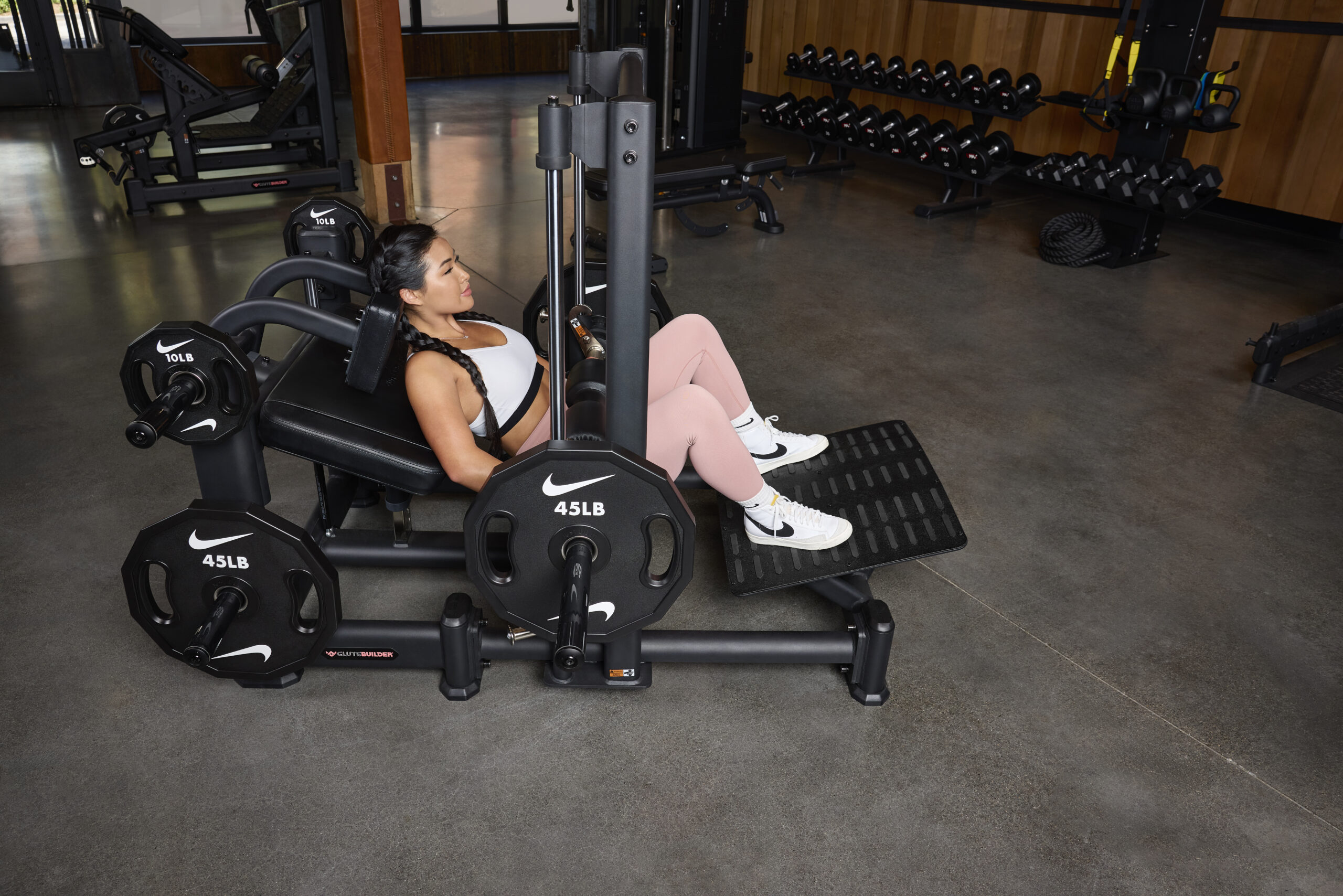
A hip thrust machine is strength-training equipment designed to train hip extension with a stable, guided setup. The movement involves driving the hips upward from a bent position before lowering them back down under control. The gluteus maximus is the primary muscle responsible for the movement, while the hamstrings and surrounding hip and trunk muscles provide support.
Compared with a barbell hip thrust, a machine can simplify positioning and reduce setup time involved with free weights. That can make it easier to establish a consistent starting position, adjust resistance and focus on movement quality.
Still, a machine is not automatically more effective than free weights. Both machines and free-weight exercises can play a useful role in a well-designed resistance training programme. The right choice depends on training goals, individual comfort, available space and the type of gym equipment for strength training available.
Muscles Worked by the Hip Thrust
The hip thrust is primarily a hip-extension exercise, with the gluteus maximus doing much of the work. However, several other muscles contribute to the movement and help maintain a stable position throughout each repetition.
- Gluteus Maximus
The gluteus maximus is the main muscle targeted during a hip thrust. It is the largest muscle in the buttocks and plays an important role in extending the hip, such as when standing from a seated position or driving the hips forward.
Research using electromyography has found substantial gluteus maximus activity during hip thrust variations. This makes the movement a valuable option for programmes focused on glute strength and development.
- Hamstrings
The hamstrings cross both knee and hip joints, allowing them to contribute to hip extension. Their involvement can vary depending on foot position, knee angle and individual technique. They work alongside the glutes rather than replacing them as the primary target.
- Adductor Magnus
The adductor magnus is another important contributor to hip extension. While better known for its role in bringing the thigh toward the body’s midline, its posterior portion can assist with hip extension when the hip moves from a flexed position.
- Core and Supporting Muscles
The abdominal and trunk muscles help maintain a stable torso as the hips move. The muscles around the pelvis also contribute to control and positioning. However, the hip thrust should still be viewed primarily as a glute-focused lower-body exercise rather than a core exercise.
Using a hip thrust machine can make it easier to maintain a consistent body position throughout the movement, allowing the glutes to remain the main focus of the exercise.
Hip Thrust Exercise Benefits: What Does the Evidence Say?
The hip thrust exercise benefits are largely linked to stronger hip extension and targeted glute training. When performed consistently with appropriate resistance, the movement can be a practical addition to a balanced lower-body programme.
- Builds Glute Strength
The gluteus maximus is a primary hip extensor and works hard during the hip thrust. Research has found high levels of gluteus maximus activation during hip thrust variations, making the exercise a practical option for developing hip-extension strength.
A 2026 systematic review and meta-analysis also found that hip thrust training improves strength in the hip thrust itself. This reflects the principle of training specificity, where regularly practising a movement can improve performance in that movement.
- May Support Glute Muscle Growth
Progressive resistance training can contribute to muscle hypertrophy, and research supports hip-extension exercises as part of an effective glute-building programme. A 2025 systematic review found that resistance training produced a moderate positive effect on gluteus maximus hypertrophy across the studies examined.
That does not make hip thrusts a miracle exercise. Squats, deadlifts and other resistance exercises can also contribute to glute development. The most effective programme is generally one that delivers appropriate training volume and can be followed consistently.
- Supports Lower-Body Training
The hip thrust can complement exercises that place greater demands on knee extension or deeper hip and knee flexion. This makes it useful within a broader hip thrust workout rather than as a replacement for every other lower-body movement.
The latest ACSM resistance-training guidance also emphasises that consistent training and appropriately matched volume and load are more important than relying on a specific type of equipment or complicated programming.
Partner with suppliers who evolve with your success.
What About Athletic Performance?
Hip thrusts are sometimes promoted as a way to improve sprinting and jumping. The evidence, however, is more nuanced. A 2026 review found that hip thrust training improved hip-thrust-specific strength but showed limited transfer to squat strength and jumping performance. The review rated the certainty of evidence as low to very low.
So, the hip thrust exercise benefits are best viewed in the context of overall resistance training, with glute strength and muscle development being more established goals than broad improvements in athletic performance.
How to Use a Hip Thrust Machine Correctly
A hip thrust machine can simplify setup, but good positioning still matters. Proper technique helps keep the movement focused on hip extension while limiting unnecessary stress on the lower back.
Step 1: Adjust the Machine
Begin by adjusting the available back, shoulder or hip supports so the body feels secure throughout the movement. Place the feet firmly on the platform with the knees bent and aligned comfortably over the feet. The starting position should allow the hips to move through a controlled range without forcing an awkward joint position.
Step 2: Brace the Torso
Once positioned, keep the trunk stable and maintain a neutral spinal position. A gentle abdominal brace can help prevent excessive movement through the lower back.
The shoulders and upper back should remain supported rather than lifting away from the pad during each repetition.
Step 3: Drive the Hips Upward
Press through the feet and extend the hips, concentrating on the glutes as the hips rise. Continue until the torso and thighs approach a straight line without forcing the hips beyond a comfortable end position. The goal is controlled hip extension, not excessive arching through the lumbar spine.
Step 4: Pause and Lower Slowly
A brief pause at the top can reinforce control and make it easier to maintain consistent technique. Lower the hips gradually until the starting position is reached, then repeat.
Avoid bouncing out of the bottom or allowing the resistance to pull the body down too quickly.
Step 5: Control Breathing
Breathing should remain steady throughout the set. A controlled inhale can accompany the lowering phase, followed by an exhale during the upward effort.
For heavier sets, breathing and bracing strategies may vary depending on training experience and programme demands.
A Simple Technique Cue
Drive through the feet, extend through the hips and finish with the glutes rather than the lower back.
A manageable load is generally more useful than adding weight at the expense of control, range of motion or stable positioning. Any sharp or persistent pain is a reason to stop the exercise and seek guidance from a qualified healthcare or fitness professional.
Common Hip Thrust Mistakes to Avoid
Even with a hip thrust machine, technique matters. Common mistakes include:
- Overarching the Lower Back
Extend the hips without forcing the spine into excessive extension.
- Using Too Much Weight
Heavy resistance can compromise range of motion and control.
- Poor Foot Placement
Find a stable stance that allows comfortable hip and knee movement.
- Rushing Repetitions
Use controlled, deliberate movements throughout each set.
- Cutting the Range Short
Work through a comfortable range while maintaining proper positioning.
Good form should take priority over heavier loading during every hip thrust workout.
Building a Hip Thrust Workout
A well-planned hip thrust workout should complement other lower-body exercises. Training goals, weekly volume and recovery all help determine how often hip thrusts fit into a programme.
Hip thrusts can be performed with heavier loads for strength or moderate repetitions for muscle growth. Progressive overload should remain gradual while technique stays consistent. The 2026 ACSM guidance highlights around 10 weekly sets per muscle group as a useful general benchmark for hypertrophy, with individual needs varying.
A hip thrust machine can complement squats, Romanian deadlifts and split squats, providing dedicated hip-extension work. Quality strength training equipment supports consistent training without replacing sound programming.
Choose PRECOR Hip Thrust Elite GPL0612 For Best Results
A hip thrust machine can be a practical addition to a lower-body strength programme, for focused glute training. For facilities looking to add dedicated glute-focused strength training equipment, the PRECOR GPL0612 Hip Thrust Elite is purpose-built for hip thrust training.
Part of the Glutebuilder® Plate Loaded range, the machine is designed around controlled movement, stable positioning and glute-focused training. It has a maximum lift load capacity of 660 lb (330 kg) and a starting weight of 66 lb (30 kg). The machine features an angled foot platform and adjustable back and shoulder pads, while its dual linear bearing system allows the barbell to move vertically and horizontally with the exerciser.
For commercial facilities, these design elements can support consistent setup and progressive loading across a dedicated glute-training station. PRECOR’s broader Glutebuilder® range is designed to target the glutes, legs and hips, making it part of a specialised ecosystem rather than generic gym equipment for strength training.
In India, TIFC is PRECOR’s exclusive distributor, bringing precision-engineered cardio and strength training equipment to the Indian market.
Partner with suppliers who evolve with your success.